Describe the target.
ARDA brings the agents.
Write who you need to reach, the way you would brief a colleague: where they live, their age, their income, what they do. ARDA matches that description against real population data, currently for Argentina, and returns the agents who fit. Each agent is a member of your target audience, not a persona written for the occasion. How the agents are built →

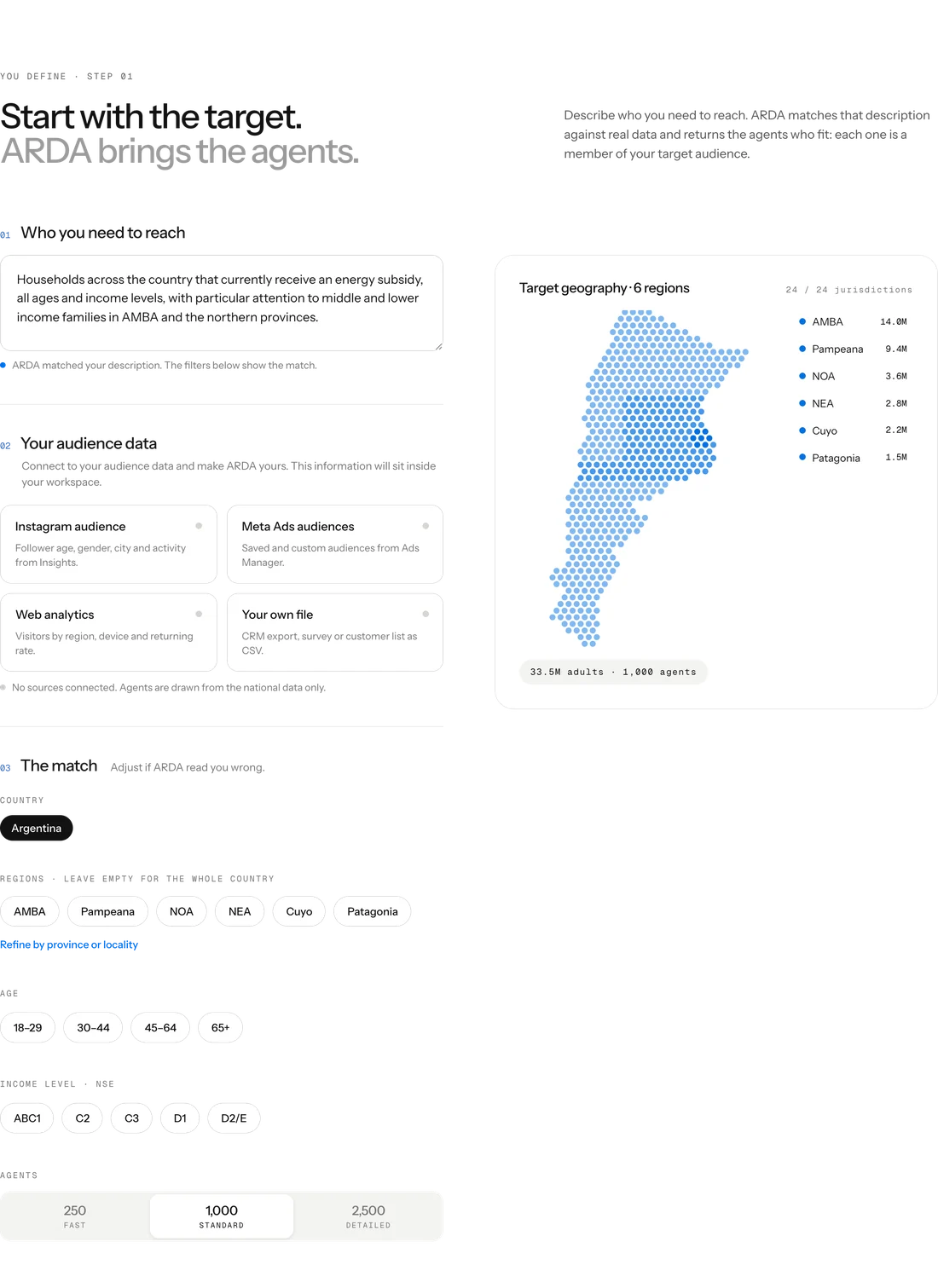
Target
The agents ARDA returns are your audience. Each one carries demographic, socioeconomic, geographic, political, cultural, informational and behavioural context at once: one person modelled horizontally, not a consumer here and a voter there. Adjust the filters if the match needs tightening.
If you already have an audience, bring it. Connect your Instagram insights, ad audiences, web analytics or a customer file, and ARDA weighs the agents it returns against the people who actually follow, buy from or read you. The result is an ARDA tuned to your audience, used for your tests only, inside your workspace.
State the message.
Say what it should achieve.
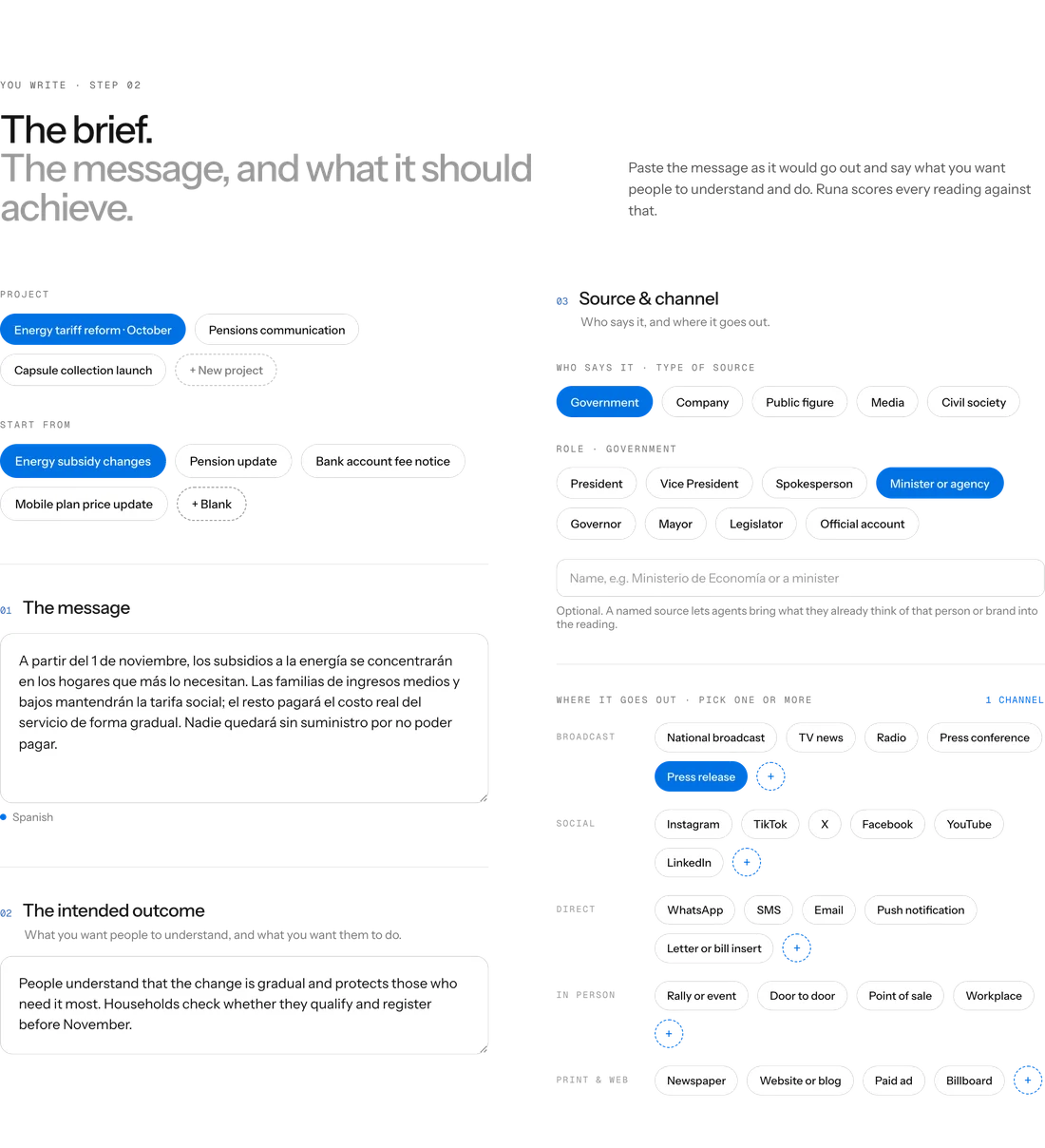
The target is set. Now paste the communication and write the intended response: the reading you want and the action it should produce. Distortion is measured against that goal, not against how loud the reaction is.
Message
One communication, one intended response, one target. Runa holds the target constant so every rewrite is compared against the same agents.
See how it lands.
The distortion returns.
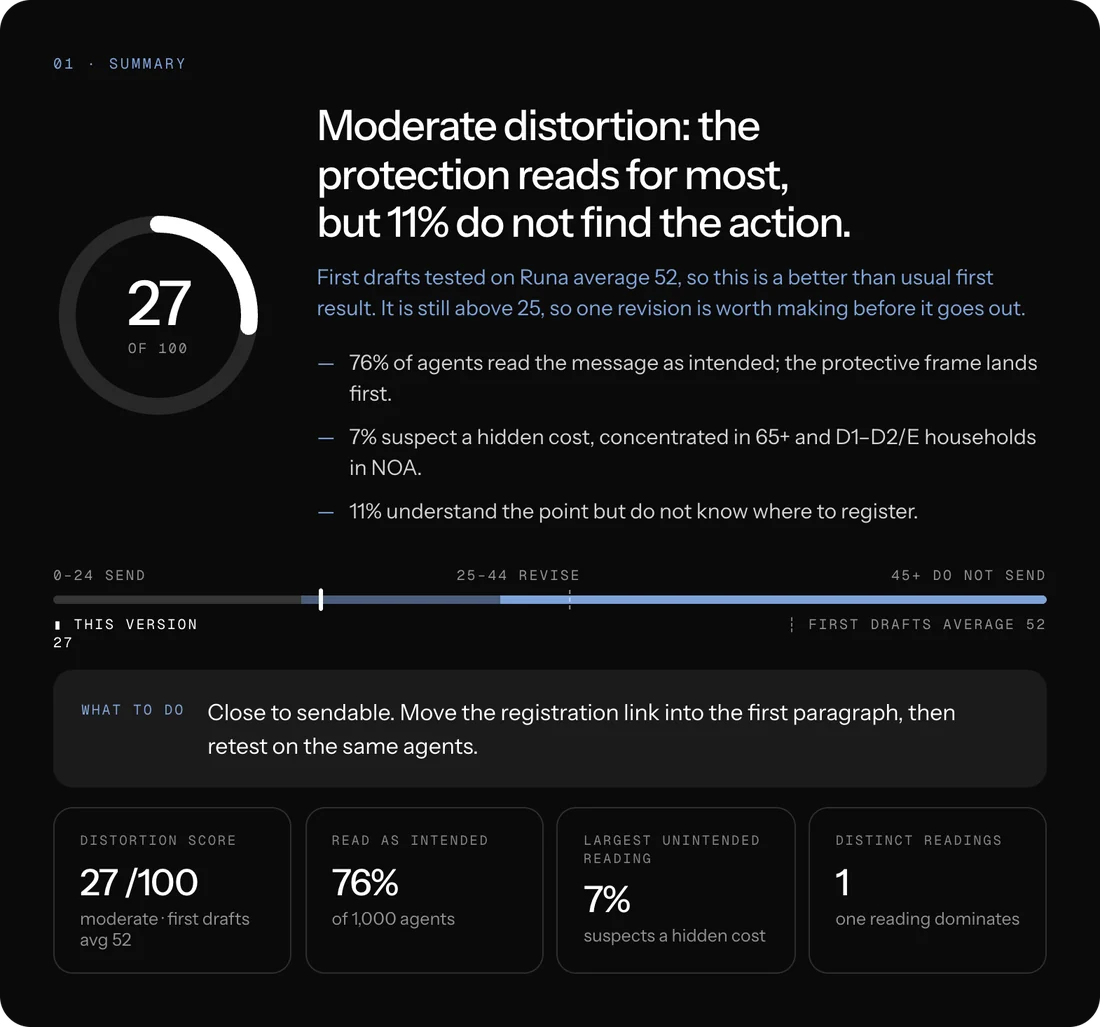
Every agent reads the same message from its own position and returns a structured response.
Report
Dominant reading, where the audience split, which segments drifted furthest, and a rewrite to rerun against the same 400 agents. Each result ships with its range and its blind spots.
Rewrite and retest.
The loop is the product.
Runa is not test → report. Change a word, a framing, the target or the intended response, and run it again against the same population. Every run is stored, so versions can be compared against each other rather than against a memory of the last round.
Swap a term, drop a clause, reorder the argument — and see which specific edit moved the reading.
Run the same message against a different geography or segment to find where it stops working.
Redefine the intended response and measure the same text against a different objective.